When I read Steve Novella’s end-of-year post this Wednesday, one thing he wrote hit me a bit hard, although you might think that it’s for an odd reason. Specifically, when he stated that he “honestly had to make a concerted effort to avoid writing about RFK Jr., Dr. Makary, Vinay Prasad, and Jay Bhattacharya (my colleagues here have it covered pretty well), in order to have some balance here and continue to tackle some of the more classic topics at SBM” and that “every week there is some outrage that deserves discussion on SBM,” it was like a slap in the face reminding me how tired and worn down I have become, thanks to writing every week one of Steve’s aforementioned outrages of the week from this administration attacking science-based medicine. Most of these attacks on science-based medicine, public health, and biomedical research have been, of course, orchestrated by longtime antivax activist turned Secretary of Health and Human Services Robert F. Kennedy, Jr. Specifically, Steve reminded me that it’s been such a long time since I myself have had a chance to write about one of the more “classic topics at SBM,” so consumed have I been with the “Make America Healthy Again” (MAHA) outrage of the week (or day). Indeed, it’s so bad that, as the weekend approached, I looked for topics not related to this administration, vaccines, or biomedical health policy, but I couldn’t. Then, as I started seriously thinking about today’s post for SBM, I couldn’t make up my mind which outrage to write about this week. (There were at least three serious contenders.) ThenI learned about an incident that led me to throw out any hope of writing about a “classic SBM topic,” at least this week. Specifically, RFK Jr. appears to have quietly funneled $1.6 million of CDC funds to support an unethical randomized controlled trial in Africa that reminded me of a modern equivalent of the Tuskegee syphilis experiment.
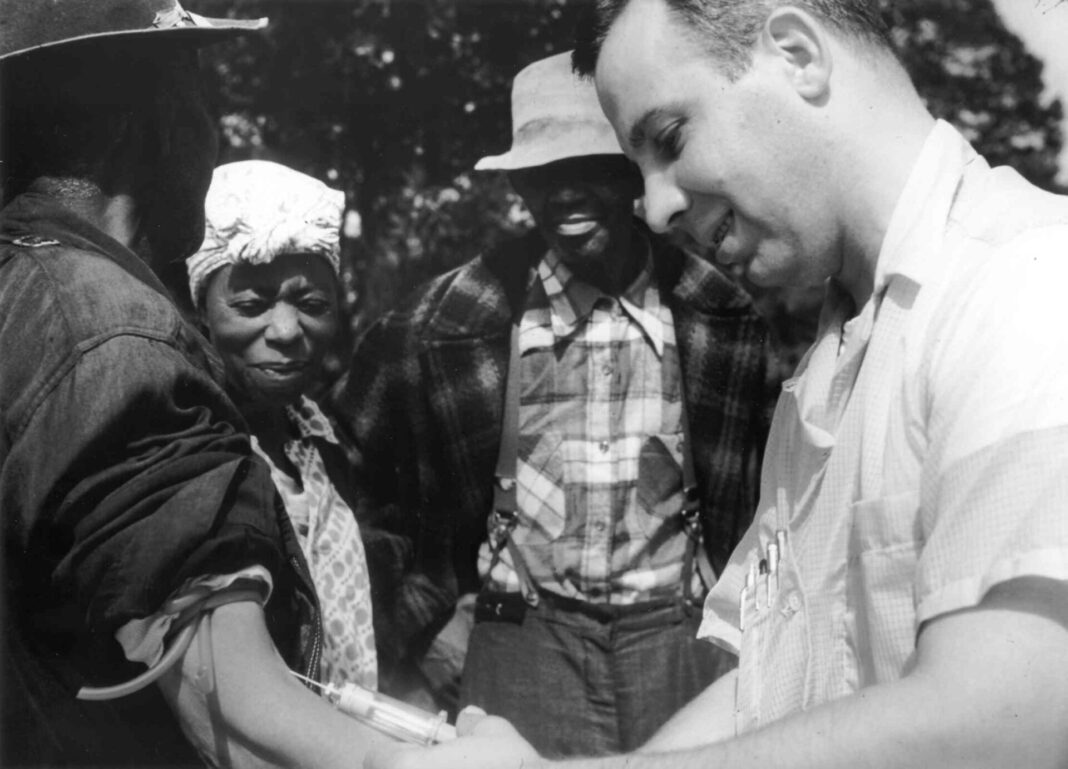
The Tuskegee syphilis study, as many might recall, was an infamous experiment carried out on conducted between 1932 and 1972 by the US Public Health Service and the CDC on a group of nearly 400 African-American men with syphilis, comparing them to a control group without syphilis, the goal being to study the effects of untreated syphilis. Although effective treatments for syphilis had been developed in the 1920s, and an even more effective drug, penicillin, had become widely available to treat the disease by 1947, the experiment continued. The Black men in the group with syphilis were not informed of existing treatments, which were withheld from them. Moreover, the original experiment had been designed to last only six months, which would have been ethically very suspect but somewhat less horrifically unethical, but instead it continued for 40 years, ending only when a leak to the press led to its termination. By 1972, 28 patients had died due to syphilis itself, while 100 had died from complications related to the disease. In addition, 40 of the patients’ wives were infected with syphilis, and 19 children were born with congenital syphilis.
So obviously and horrifically racist and unethical was this study that exposure of the Tuskegee syphilis study in the press ultimately led to the Belmont Report in 1979, which became, after the Nuremberg Code in 1947, a foundational document regulating medical ethics of HHS-funded human subjects research. Since then, ethical standards have tightened even more with the World Medical Association Declaration of Helsinki, which is updated every few years. The Tuskegee study is one reason among many—but a big reason—why there are now extensive HHS regulations governing human subjects research codified under the Common Rule (45 CFR 46) and requiring, among other things, informed consent, voluntariness, approval and oversight by an ethics committee known as the institutional review board, and protection of vulnerable populations from exploitation, such as children and prisoners. With that background, in this post I will attempt to show you why this study is unethical, not justified based on the science, and reeks of cronyism.
I’m not the only one to compare this $1.6 million award to the Tuskegee syphilis study; Derek Beres of Conspirituality beat me to it. However, given how dubious and unethical this funded study is, I don’t consider the comparison to be too overblown. Let’s start by looking at the announcement of this award in the CDC register and gleaning what we can about the study itself. I’ll then briefly discuss the history of the antivax movement’s invocation of the Tuskegee study, to turn this around and demonstrate why this award reeks of a modern day resurrection of Tuskegee, complete with additional corruption and cronyism.
A mysterious announcement appears
Last Thursday, an announcement from the CDC appeared in the Federal Register entitled Notice of Award of a Single Source Unsolicited Grant To Fund University of Southern Denmark (SDU). Fortunately, a number of researchers took notice, as did some reporters, all of whom saw a number of red flags, to the point where various news outlets started investigating. First, let’s look at what is so concerning.
From Science:
Public health scientists are raising concerns following news of a $1.6 million award from the U.S. Centers for Disease Control and Prevention (CDC) for a trial of hepatitis B vaccines in newborn babies in the West African nation of Guinea-Bissau. The funding is for an unsolicited proposal from a group in Denmark whose work has emphasized the potential dangers of vaccination and has frequently been criticized. Some researchers say the study raises ethical issues and is unlikely to offer scientific insights into a vaccine already known to be efficacious and safe.
The agency’s award comes on the heels of its controversial decision on Monday to revoke a longtime recommendation that all U.S. newborns get their first dose of the vaccine at birth. A CDC notice published today states that the 5-year study will investigate “the optimal timing and delivery” of hepatitis B vaccines, and collect data on “early-life mortality, morbidity, and long-term developmental outcomes.”
I discussed the ACIP decision to drop the routine universal recommendation for a birth dose of hepatitis B vaccine and why it’s so unjustified. However, antivaxxers were going to do what antivaxxers do. Also, the hepatitis B vaccine has long been a bête noire of the antivax movement, and this study suggests that MAHA is far from done with attacking the vaccine. Let’s shift now to what the CDC notice says about the study:
The Centers for Disease Control and Prevention (CDC), located within the Department of Health and Human Services (HHS), announces the award of approximately $1,600,000 over a five-year period, in response to an unsolicited proposal that has been submitted by University of Southern Denmark (SDU). The award will support a comparable study of the optimal timing and delivery of monovalent Hepatitis B vaccinations on newborns in Guinea-Bissau. Activities will include conducting a randomized controlled trial to assess the effects of neonatal Hepatitis B vaccination on early-life mortality, morbidity, and long-term developmental outcomes. The award is in response to an unsolicited proposal.
I realize that the details are sketchy, and not much more information is provided in the rest of the notice. Let’s just say that I would really, really like to see the detailed research proposal and, most importantly, the protocol for the randomized clinical trial itself. I’d also like to see the budget, because, as you will see below, $1.6 million strikes me as grossly insufficient to run a study of the type proposed over five years. In any event, the information provided is more than enough to raise serious alarm bells regarding the science and ethics of the proposed study that Science reported:
The proposed work being funded will support a single-blind, multi-center, phase IV randomized controlled trial enrolling over 14,000 neonates in Guinea-Bissau to evaluate the impact of neonatal monovalent Hepatitis B vaccination (HBV0) on all-cause mortality, severe morbidity, and long-term developmental outcomes. The study will also assess potential sex-differential effects of the vaccine. While the World Health Organization (WHO) recommends three vaccines at birth in low-income settings—Bacille Calmette Guérin (BCG), oral polio vaccine (OPV0), and HBV0—there is limited evidence on the broader health effects of HBV0. This study aims to fill that gap by rigorously evaluating the overall health impact of HBV0 in early life.
At this point, readers who are not familiar with the issues of “nonspecific effects” of vaccines might be scratching their heads, wondering what the heck this study is proposing and perhaps even what is wrong with this study from an ethical and scientific standpoint. I know that when I first read this description, one thing stood out, from a strictly scientific standpoint: Nowhere do I see among the primary outcomes to be tracked one that any vaccinologist would consider to be the most important, namely the incidence of hepatitis B in infants receiving the birth dose versus those receiving the current dose at six weeks of age, you know, the disease that the vaccine is designed to prevent. Nor do I find among any of the outcomes another critical outcome, namely the incidence of chronic hepatitis B, which is the form of the infection that produces an enormously elevated risk of liver failure and liver cancer during an individual’s lifetime. Of course, by design, a five year study is far too short to quantify beneficial effects of the birth dose of hepatitis B vaccination on long-term outcomes, which suggests to me that this study is clearly intended to generate data showing adverse health outcomes associated with the birth dose. (This ain’t my first rodeo.)
But back to nonspecific effects of vaccines. It didn’t take long after the CDC announcement hit the federal register for scientists, physicians, health communicators, and reporters to figure out upon whom this CDC largesse will be showered. Indeed, as soon as I learned of this news, I—and, to be fair, many who follow vaccine-related issues—immediately guessed immediately who the investigators most likely were. We were correct (ot that it was any great insight to be correct), and soon news reports confirmed that the investigators receiving this grant are Christine Stabell Benn and her husband, Peter Aaby, who together lead the Bandim Health Project, a research site located in Guinea-Bissau in West Africa.
Unsurprisingly as well, as has been reported in articles on various news and commentary websites, there are ties between one of the investigators and FDA officials that produce an acrid stench of cronyism. Specifically, Stabell Benn is buds with Dr. Tracy Beth Høeg, who before the pandemic was a sports medicine physician with no experience in vaccinology but during the pandemic became a prominent influencer by promoting COVID-19 contrarianism and anti-COVID vaccine misinformation. She is now a top advisor to FDA Commissioner Dr. Marty Makary and acting director of the Center for Drug Evaluation and Research (CDER), the FDA center in charge of approving all non-biologics drugs. Never mind that she is utterly unqualified for this position, having never herself designed or run a randomized controlled clinical trial of the sort required by the FDA to approve a drug and being utterly lacking in relevant experience in drug regulation to be the chief scientist in charge of drug approval and regulation.
STAT News describes this relationship between Stabell Ben and Høeg:
The two have co-hosted a podcast together called “Vaccine Curious” where they compare vaccine policies in the U.S. and Denmark. Høeg is also the FDA’s representative on the CDC’s ACIP panel, where she recently pushed for the U.S. to reduce the number of vaccines it gives newborns.
Stabell Benn told STAT in April that she would like regulators to raise the bar on vaccines. She suggested asking companies to prove not only that their products introduce antibodies or reduce the risk of the target illness, but that they improve overall health.
“There is a misunderstood fear that if we start digging down and scrutinizing vaccine effects on overall health, then we might reveal something that could shatter confidence,” Stabell Benn said. “But it’s really not the way to deal with uncertainty. To say that if we are so afraid of what we are finding, we will just not study it. I can’t see any excuse.”
I find myself drifting back to the early 1980s to respond, “Gag me with a spoon!” Seriously, this is the same schtick that every antivax-leaning investigator invokes whenever they are criticized for promoting scientifically unsupported speculations about harms from vaccines. That’s when they like to quote Colonel Nathan Jessup (played by Jack Nicholson) in A Few Good Men: “You can’t handle the truth!”
Seriously. We can handle the truth. It is, after all, scientists who study vaccines who discover real potential adverse reactions due to them. What irritates us are misinformation, disinformation, pseudoscience, and lies being sold as “The Truth.”
This relationship also helps explain why it’s been reported that the topic of an HHS press conference planned and canceled by RFK Jr. last Friday was to be to announce that the US would be moving to a vaccine schedule much more like that of Denmark, which vaccinates against far fewer diseases. This is not entirely a surprise to me given that two weeks ago I discussed how much current antivax leadership at CDC and FDA fetishizes the Danish schedule as “best practices,” while ignoring all the other things that Denmark does with respect to health, most importantly its government-funded program of universal health insurance. It’s a tendency that Angela Rasmussen pithily referred to as the the “vaccine disinformation to descheduling pipeline,” adding, “Make America Denmark never.” It is, however, a surprise that RFK Jr. moved that fast to implement such a program. Indeed, there are a number of very good scientific and public health reasons why the US vaccination schedule should not mirror Denmark’s, particularly for hepatitis B vaccination. Be that as it may, the press conference has been postponed until January; so I guess my writing about this (which was another of the at least three horrors that I went back and forth about writing about as I approached this weekend) can wait until 2026.
But back to the study, such as it is, even given how little we know about it.
To give you an idea of Aaby and Stabell Benn’s dedication to scientific rigor, let me just quote a bit more from the STAT News article, but first let me provide context. Aaby’s desire to study nonspecific effects of vaccines seems to have come out of a reasonable experience, as reported in Mother Jones. Specifically, while studying malnutrition in Guinea-Bissau in 1979 during a measles outbreak with horrific mortality, Aaby noticed that vaccinated children didn’t die from measles, which was unsurprising, but also had a lower all-cause mortality from any disease, which was surprising, especially the magnitude, a three-fold decrease. This was actually one observation where Aaby’s work might actually have been a legitimate contribution, as decades later it was discovered that the measles virus can cause immune amnesia for up to three years after infection, leading to an increased risk of infection and death from other pathogens. Prevent measles, and you prevent that immune amnesia. Truly, the measles vaccine does appear to protect against more than the measles.
Unfortunately, the discovery of immune amnesia from measles might have just been Aaby getting lucky, as methodology of his later studies with his wife, some of which found negative nonspecific effects from vaccines, has been questionable. For example, in 2017, Aaby and Stabell Ben published an observational study using data from Guinea-Bissau during the 1980s that has been widely cited by antivaxxers ever since, including RFK Jr. In brief, it was a “natural experiment” in which they followed children after the DTP vaccine was introduced to an urban area, reporting that receiving the DTP vaccine was “associated with a mortality hazard ratio (HR) of 5.00 (95% CI 1.53-16.3) compared with not-yet-DTP-vaccinated children.” I won’t deconstruct this study in detail, because friend of the blog Skeptical Raptor took care of that at the time, as did I. Let’s just say that it’s not a good study.
Now, look at what STAT News reports:
Kennedy has repeatedly cited their research in interviews, particularly an observational study showing an increase in mortality among children who received the DTP vaccine, which prevents diphtheria, tetanus, and whooping cough.
The couple has come under fire in the Danish press for failing to publish the results of a separate randomized controlled trial they ran on the DTP vaccine in 2011, while touting the results of the observational study. Fellow Danish researchers have expressed skepticism of the Bandim Health Project’s methods and conclusions, according to articles from Weekendavidsen.
Where’s the RCT? Why doesn’t RFK Jr. want to see the results of the RCT? Could it be because the RCT doesn’t show what the observational study using 40+ year old data showed? I mean, just look at their excuse:
The couple told Weekendavidsen that they never published the results of the randomized trial due to a Ph.D. student’s pregnancy and the death of her field supervisor. The student “didn’t have time for long-term follow-up, and we didn’t have new resources to continue,” they said.
When life happens, as in a key personnel becoming pregnant, generally the principal investigator takes over until a replacement can be found—or just takes over indefinitely. Let’s just say that the couple’s excuse sounds a lot like, “The dog ate my paper.”
Worse, as Liz Szabo reported in CIDRAP:
In June, Kennedy used a single study by the Bandim group to justify canceling more than $1 billion in funding for childhood vaccinations in developing countries. The observational study found an increased risk of death in children who received a combined vaccine for diphtheria, tetanus and pertussis (DPT) that hasn’t been used in the United States in three decades.
And, of course:
Yet Children’s Health Defense, the anti-vaccine organization Kennedy founded, cites the Danish group’s research on multiple pages of its website. One article praises the Bandim Health’s founder, Danish anthropologist Peter Aaby, casting him as a martyr who lost his funding when he suggested vaccines cause more harm than good.
Because of course he did.
I note that the person writing the article cited was none other than J.B. Handley, founder of Generation Rescue, the antivax group that later persuaded Jenny McCarthy to be its figurehead president back in the day. (I also note that I deconstructed the misinformation in this very article back in the day.) Did I also forget to mention that Peter Aaby isn’t even a vaccinologist, infectious disease specialist, epidemiologist, or any specialty with training in running clinical research? I have nothing against anthropologists; I find anthropology fascinating and very difficult, given the limitations of applying scientific methodology to the topics studied. It’s just that anthropologists are not one of my go-to professions for carrying out studies on vaccine efficacy and adverse events. Stabell Benn is, of course, a physician, but she seems to have drunk the Kool-Aid with respect to claims that a number of vaccines having nonspecific effects that are more harmful than their beneficial effects. Let’s just put it this way. There’s a reason why antivaxxers love her and her husband. (Granted, they don’t like their work showing that MMR has beneficial nonspecific effects, but they somehow ignore that part of the couple’s oeuvre.)
Indeed, Aaby and Stabell Benn’s studies have been widely criticized for their poor methodology. A recent commentary and reanalysis of clinical trials published earlier this month in Vaccine by Henrik Støvring et al in response to an article by Stabell Benn arguing that the evidence for adverse nonspecific effects of vaccines is now so compelling that we should significantly change how vaccines are approved and their safety monitored:
We have reached a point in time when we must rewrite our understanding of vaccines. It is no longer tenable to maintain a narrow perspective on vaccines as biological preparations that induce specific protection against a specific disease. NSEs make life more complicated for both policy makers and regulators. However, the reward is the auspicious prospect of wiser vaccination programs designed to protect against specific diseases and provide general immune training with even bigger benefits than in current programs.
Let’s just say that Støvring et al were…less than impressed:
However, just as the commentary appeared in Vaccine, a series of Danish news articles scrutinized the research practices of Drs Benn and Aaby. As external experts in statistics and research methodology, we were asked to contribute independent assessments of their conclusions from their own randomized controlled trials. We were surprised to find several instances of questionable research practices, such as unpublished primary outcomes, outcome switching, reinterpretation of trials based on statistically fragile subgroup analyses, and frequent promotion of cherry-picked secondary findings as causal, even when primary outcomes yielded null results. Sample size calculations appeared to be driven by unwarranted optimism regarding effect-sizes and event rates leading to underpowered studies.
The commentary focused on results from randomized trials (RCTs) to motivate policy changes. Yet, RCTs are only as good as the extent to which their analysis and reporting practices can be trusted. As the risk of false positives increases with the number of examined hypotheses, any findings from secondary, presumably exploratory, analyses should be viewed with caution, when primary outcomes fail to achieve statistical significance. Adjustment for multiple comparisons then becomes essential to make meaningful inferences beyond the primary endpoint.
In other words, Støvring et al found evidence that Aaby and Stabell Benn had cherry picked secondary and subgroup outcomes in papers for which the results in the primary outcome were negative, which is a no-no. Such results can be hypothesis-generating, but, unless prespecified in the protocol and statistical analysis, should not be inferred as causation. In many of their papers, they also apparently failed to do a basically statistical correction, namely to correct for multiple comparisons. As Støvring et al note:
Strong scientific claims based on flexible reporting of secondary hypotheses can be highly misleading [32]. When researchers explore data post hoc—after seeing the results—they may be tempted to highlight apparently interesting patterns or associations based on statistically significant findings. However, without proper correction for the number of tests performed, these are at high risk of being randomly occurring false positives. While explorative findings are essential for generating new hypotheses, they become problematic when presented as if confirmatory.
It should be emphasized here that Guinea-Bissau is a poor nation in Africa with a very high childhood mortality rate, as well as a high level of hepatitis B infection. As reported in multiple outlets, it is a country in which the prevalence of hepatitis B infection approaches 20%. Moreover, given the poverty of the country, maternal testing for hepatitis B infection is sporadic, at best. In other words, Guinea-Bissau is exactly the sort of country where the birth dose of hepatitis B vaccine would be expected to do the most good. Now here’s the wrinkle. As reported in STAT News and elsewhere, Guinea-Bissau plans to implement the birth dose of hepatitis B vaccine in 2027, which is the recommendation of the World Health Organization, changing its recommendation from its current guidelines recommending vaccination at 6 weeks. In other words, time’s running out for antivaxxers to do such a study in an underserved impoverished population. They had to strike while they still could, while the recommendation in the country still allows it.
I know what some out there might be thinking: What’s the big deal? The current recommendation for childhood vaccination with hepatitis B in Guinea-Bissau is to administer a dose at age 6 weeks. Could six weeks make that big a difference? Why is this study so unethical? There are a number of reasons. First, there is no strong scientific justification for the study, no preliminary data to lead one to suspect that there are nonspecific effects, positive or negative, associated with the birth dose of hepatitis B vaccination, as described by Szabo:
Multiple researchers who spoke to CIDRAP News questioned the need for another study of hepatitis B vaccines, which have been proven safe and effective in more than 400 studies over 40 years.
“The data that supports the safety advocacy of the current hepatitis B vaccines is very robust,” said Amesh A. Adalja, MD, a senior scholar at the Johns Hopkins Center for Health Security.
“Given the stance of the CDC under RFK Jr’s control, one can assume that the results of this study will be preordained to be against the hepatitis B vaccines,” Adalja said. “Continuing to do studies on a question that is already been answered sufficiently is a waste of resources that could better be used answering new questions.”
Precisely. As much as RFK Jr. claims to be supporting “gold standard science,” it’s not gold standard science to keep restudying an issue that has such a huge evidence base supporting one conclusion. It’s trying to generate an outlier study to justify what you want to do anyway. Worse, this award was granted through a completely opaque process in which Stabell Benn, a crony of Tracy Beth Høeg and someone who likes RFK Jr, sent the CDC an unsolicited research proposal, which was granted without any evidence that it underwent anything resembling a rigorous NIH study section-style peer review. Worse, the study intentionally takes advantage of an underserved, vulnerable population, namely children in a poor country with a very high infant and childhood mortality rate, to test a hypothesis that can’t ethically be tested in the United States or Europe. Indeed, no institutional review board in the US would grant ethical approval to a study like this, nor should any IRB do so. Ditto Europe. Moreover, in the US and European countries, it is unethical to carry out a study on a population in another country that would be considered unethical to do in the US or Europe, and this study stinks to high heaven.
As Angela Rasmussen put it:
Rasmussen notes that it would not be ethical to provide a birth dose of the hepatitis B vaccine to some babies but not others, given that doctors know the immunization saves lives, both in the early newborn period and decades later.
Exposing thousands of babies to “a significant risk” of hepatitis B “in a low-income country with limited health care resources” would be “wildly unethical and a disgraceful use of American taxpayer money,” Rasmussen said.
Correct. And, as Dr. Jake Scott, a clinical associate professor of infectious disease and geographic medicine at Stanford University School of Medicine, put it:
Scott said the study’s announcement suggests that the CDC isn’t truly looking for answers.
“In evidence-based policy, you gather data and then make a decision,” Scott said. “This is the reverse. CDC made the policy decision and then funded research to back it up. When you commission research after making a decision, you’re not looking for answers—you’re looking for validation.”
And that’s exactly what RFK Jr. is doing here. It is, as our very own Dr. Jonathan Howard put it, “policy-based evidence making.”
So where do comparisons to the infamous Tuskegee syphilis experiment come in?
The Tuskegee syphilis experiment: For MAHA, every accusation is a confession (of intent)
As Derek Beres noted and as I have written about for ages and ages, the antivax movement in general and RFK Jr. in particular have loved to invoke the Tuskegee syphilis experiment with respect to vaccines in an attempt to portray vaccine research as being as horrifically unethical as that infamous experiment. Just for yucks, I searched this blog and my not-so-super-secret other blog for “Tuskegee” and “vaccines.” (You can do the same search yourself, if so inclined.) Let’s just say that, whenever antivaxxers, including RFK Jr., are trying to demonize vaccines in front of an audience consisting primarily of Blacks and other minority groups in the US, they just love to trot out the Tuskegee syphilis study. Here are just a few examples:
- When antivaxxers descended on the Somali immigrant community in Minnesota, who had been in the news for the high prevalence of autism in their community, in order fuel the flames of suspicion of vaccines as the cause, Andrew Wakefield invoked—of course!—the Tuskegee syphilis study.
- In 2018 at a chiropractic conference, RFK Jr. analogized the CDC whistleblower manufactroversy to the Tuskegee syphilis experiment on black men, an analogy he dredged up again in describing a California bill (which ultimately became law) tightening vaccine exemption requirements, all the while cozying up to the racist and anti-Semitic Nation of Islam.
- At an event targeting Black people in Compton, Andrew Wakefield and Del Bigtree nodded approvingly as a Black antivaxxer named Sheila Ealey invoked the Tuskegee syphilis study, as well as the horrendous history of white physicians conducting painful and unethical experiments on enslaved people before the Civil War.
- Over one of the taped conversations with William Thompson (a.k.a. the “CDC whistleblower” of The CDC whistleblower conspiracy theory at the heart of Andrew Wakefield and Del Bigtree’s antivax propaganda film disguised as a documentary, VAXXED), Andrew Wakefield invoked the Tuskegee syphilis study because a dodgy subgroup analysis from the study in question was being misrepresented as having shown that the risk of autism induced by vaccines was most pronounced in Black boys, a four-fold increase. Note that just last week STAT News reported that Thompson been promoted to a high ranking job at the CDC to oversee research into adverse events due to childhood vaccines. Yes, that was another possible topic of this post in and of itself. (As an aside, Thompson recently sent me cease-and-desist emails about old posts about him written by me. I can post them if you like.)
- In a 2016 letter accusing the CDC of scientific fraud based on the “CDC whistleblower” conspiracy theory, Brian Hooker and Andrew Wakefield accused the CDC of conducting another Tuskegee experiment.
I could go on and on and on, but you get the idea.
This brings me back to the title of this post. With MAHA in general—and RFK Jr. and antivaxxers in particular—every accusation is a confession or, at least, a confession of intent. The current study checks a lot of the boxes that the Tuskegee syphilis experiment did. It’s arguably racist in that white investigators from wealthy European countries and the US are targeting Africans, as the Tuskegee study targeted African-Americans and was run by white investigators. It targets a vulnerable population (children), as the Tuskegee study targeted poor Black men with little education or access to high quality medical care. It has not good scientific basis, just as the Tuskegee syphilis experiment did not have a sound scientific rationale, and by its very design it is likely to intentionally expose one group to harm, just as the Tuskegee syphilis experiment did. Indeed, after recent criticisms of Stabell Benn and Aaby’s work, even the research base suggesting harmful nonspecific effects due to vaccines has now been largely cast into extreme doubt, leaving even less of a scientific rationale for this study.
In fairness, one does have to point out some differences. The Tuskegee study was not randomized, as the proposed Stabell Benn and Aaby study is. However, it remains a foundational principle of biomedical research ethics that human subjects should not be knowingly randomized to a group that is more likely to suffer harm, which is what this study is likely to do. One must also remember that these are not neutral or benign actors. They have a history. Context matters. After all, what RFK Jr. has kept demanding, RCTs of existing vaccines versus saline placebo, is every bit as profoundly unethical as this study by Stabell Benn being funded by the CDC. Now maybe—maybe—the study protocol will be published, and I will have to eat crow, finding that there are no major ethical issues. No doubt Stabell Benn and Aaby won’t believe me, but let me just say that I even hope that that will be the case. However, I find it very difficult to believe that outcome likely given what we know now about the study, the history of its investigators, the hush-hush way it was funded and announced in the federal register in a way clearly intended to make it less likely that anyone would notice, and the obvious cronyism in how the award was granted. (Fortunately, there were reporters on the case who noticed the announcement of this study and now we all know.)
In the end, the reality of the situation is that neither MAHA nor antivaxxers like RFK Jr. ever really had any major ethical qualms about randomized controlled trials that randomize a group to likely harm, contrary to RFK Jr.’s rants about “no saline placebo-controlled trials” of vaccines and his penchant for comparing vaccine science to the Tuskegee syphilis study. Rather, led by RFK Jr., MAHA just wanted to be the one to do their own versions of the Tuskegee study—or to make sure that investigators who will do a 21st century Tuskegee equivalent will receive the research funding to do so—in order to generate data that casts the safety of vaccines into doubt as part of his effort to eliminate vaccines. Also, being part of the Trump administration, RFK Jr. can’t resist emulating his boss and treating research funding like patronage, funneling money to ideologically aligned researchers (like Stabell Benn and Aaby, regardless of science. Grift and unethical human experimentation are but two tools in the MAHA playbook to chip away at vaccine science.