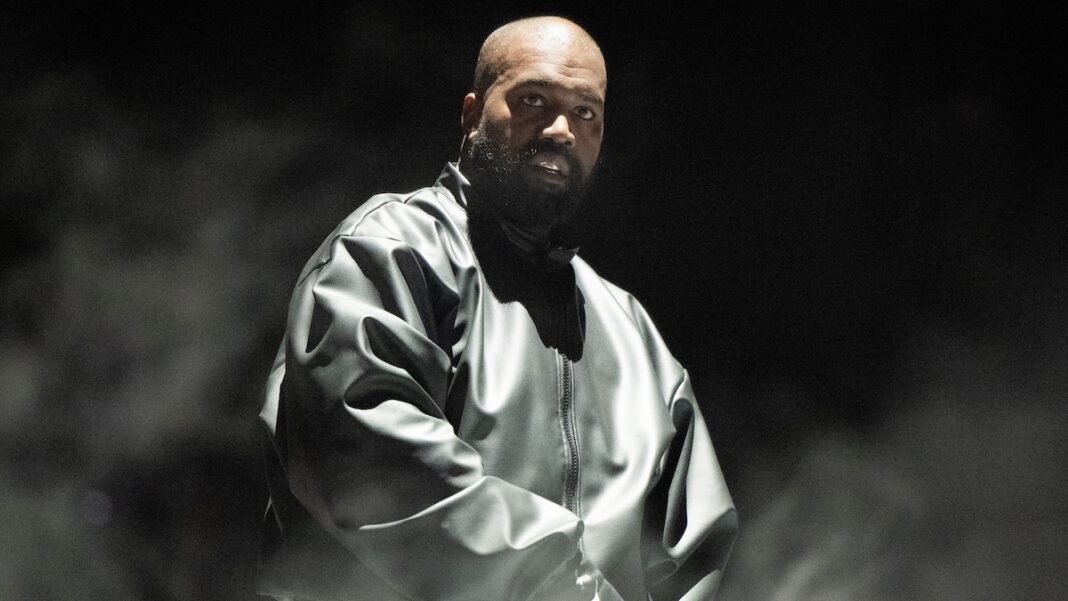
When Kanye West‘s New Delhi stadium show was officially announced, the reaction across India was immediate and euphoric. Ye is set to perform at Jawaharlal Nehru Stadium on March 29th, 2026, marking his first-ever full-scale live show in the country and positioning the capital for what is expected to be a 60,000-capacity show. Within hours of the announcement, social feeds filled with archival clips from the Saint Pablo tour and his previous sets in Mexico, fashion accounts revisited Yeezy silhouettes, and Mumbai fans quickly began campaigning for a second date, framing Delhi’s booking as both a win and a provocation.
For a market that has spent years watching major rap tours bypass South Asia, this booking feels less like a routine tour stop and more like an arrival. India’s live music ecosystem has expanded rapidly over the past few years, with Coldplay’s record-breaking stadium shows in Ahmedabad and Mumbai demonstrating that the country can sustain massive international productions, and festivals like Lollapalooza India and Rolling Loud India bringing major global headliners into the market at scale. Within that context, Ye’s show is being framed locally as another milestone, one that reinforces India’s place on the global touring map rather than as a secondary addition.
What has been far less central to the excitement here are the controversies that reshaped Ye’s public image in the Western market.
Over the past few years, Ye made a series of antisemitic statements on social media and in interviews. In October 2022, he posted that he would go “death con 3 on Jewish people.” Weeks later, during a livestreamed interview with conspiracy theorist Alex Jones, he said, “I like Hitler” and praised aspects of Nazi Germany — remarks that drew immediate global condemnation.
Related Video
The fallout was swift and significant. Adidas terminated its billion-dollar Yeezy partnership, Balenciaga cut ties, Gap ended its collaboration, and his talent agency CAA dropped him. His accounts were suspended across major social media platforms, and he became the focus of intense debates about antisemitism, extremism, corporate responsibility, and the limits of celebrity tolerance.
In Western discourse, Ye’s trajectory was folded into broader culture-war narratives. Former President Donald Trump, who had previously hosted Ye at the White House in 2018 and praised him publicly, became part of the political backdrop against which Ye’s later remarks were interpreted. When Kanye later dined with Trump at Mar-a-Lago in 2022 alongside Nick Fuentes, the controversy deepened. The episode became entangled in broader partisan debates, with conservative commentators raising concerns about “cancel culture,” while others argued that the moment reflected deeper tensions around extremism and public accountability. Ye’s comments became entangled in debates about American nationalism, identity, free speech, and whether certain communities were being positioned as less “American” than others.
For months, the controversy did not sit at the margins of his legacy; it defined it.
In January 2026, he went further, purchasing a full-page advertisement in The Wall Street Journal titled “To Those I’ve Hurt.” In the letter, Ye denied being “a Nazi or an antisemite,” said “I love Jewish people,” and again attributed his inflammatory remarks and actions — including selling swastika T-shirts and releasing a song that referenced Adolf Hitler — to a severe bipolar-1 episode linked to a previously undiagnosed frontal-lobe injury. He apologized not only to the Jewish community but also to the Black community and his family, writing that he had “lost touch with reality” and was committed to treatment, accountability, and meaningful change. The paid ad reignited debate in Western media about whether public contrition, mental health framing, and time are sufficient to recalibrate a legacy so deeply marked by controversy.
In India, however, even this apology and its mental health framing have not significantly shaped the discourse around the New Delhi booking. The reaction here has not centered on whether he has done enough to atone, whether mental illness mitigates harm, or whether corporate reinstatement should follow apology.
A scan of early Indian coverage illustrates this divergence. Several entertainment outlets focused primarily on ticketing timelines, venue details, and Ye’s catalog, with little or no reference to antisemitism in the copy. On social media platoforms, highly engaged posts celebrated the announcement as “historic” and “long overdue,” with comment sections dominated by setlist predictions and resale speculation rather than moral debate. While some users did raise concerns, they were not the dominant thread shaping the reception. The prevailing tone was celebratory, not interrogative.